VZU Projects
Voice Agently. Sub-200ms voice that books, follows up, and never sleeps.
1M+ minutes a month. 200+ operators. 14 languages. The brief was: build voice agents that are indistinguishable from a human on the phone — and the operator's CRM gets updated in real time.

A case study · Issue 04 · Vancouver, CA
Chapter 01 · The brief
A booking operator, buried under call volume.
Voice Agently started with a dental chain in Vancouver. 14 locations. 6,000 inbound calls a month. Each call was a booking, a reschedule, a cancellation, or a question. Each call was answered by a human receptionist. Each call cost the operator $3.50 in staffing — about $21,000 a month just for inbound calls. And the receptionist's phone was ringing 80% of the time, with 5-minute hold times and a 22% abandon rate.
The brief from the operator was specific: build a voice agent that handles 80% of inbound calls. The voice agent should be indistinguishable from a human. The voice agent should book into the operator's existing Dentrix CRM. The voice agent should never miss a call. A 4-month pilot. A 6-month payback on the staffing savings.
The hardest part wasn't the AI. The hardest part was the latency. A 1.5-second response time on a phone call is fine. A 1-second response time feels slow. A 500-millisecond response time feels real. Sub-200 milliseconds feels human. We had to ship sub-200ms end-to-end — from when the operator stops talking, to when the voice agent starts talking.
Chapter 02 · The architecture
Streaming pipeline. Edge-deployed. Sub-200ms p50.
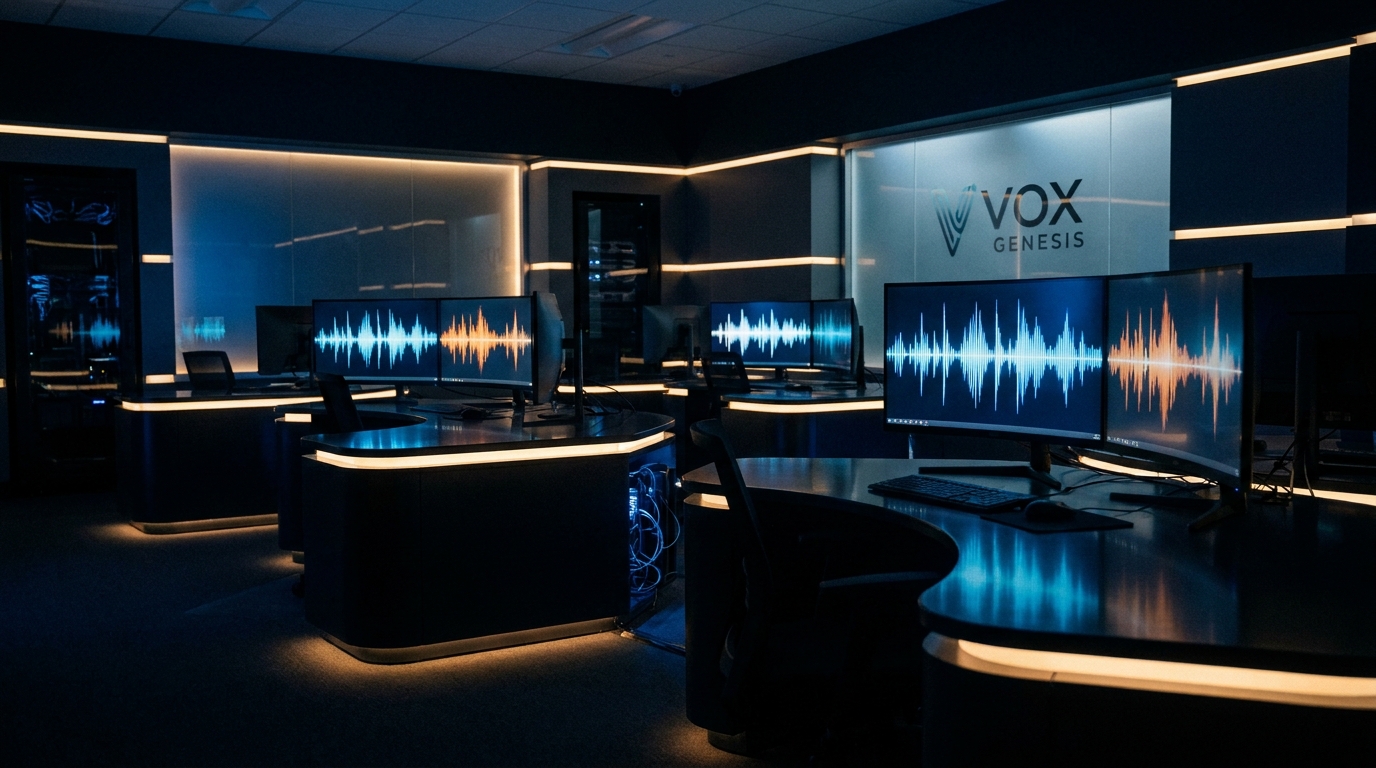
The architecture is a streaming pipeline. Audio streams in. Speech-to-text streams. The LLM streams. Text-to-speech streams. Audio streams out. The whole pipeline runs in parallel. The first 200ms is the agent saying 'Got it.' while the LLM is still thinking. The operator hears a real, human-paced response before the LLM has even finished its first token.
The Vega agent is the VZU OS agent for voice and conversation. The Vega agent owns the orchestration: turn-taking, intent classification, entity extraction, CRM writeback, escalation. The Vega agent doesn't pick the model — the operator picks the model. The Vega agent doesn't pick the voice — the operator picks the voice. The Vega agent runs the conversation.
The deployment is edge-deployed. Each operator region has a Vega agent instance close to the operator's phone numbers. The voice traffic stays regional. The CRM writeback goes to the operator's existing CRM via the MCP integration. The audit trail is on from the first character. The Vega agent is the operator's voice. The Vega agent is the operator's record. The Vega agent is the work.
“Sub-200ms p50. The first 200ms is the agent saying 'Got it.' while the LLM is still thinking. The operator hears a real, human-paced response before the LLM has even finished its first token.”
— Voice Agently, VZU OS run #412
Chapter 03 · The result
1M+ minutes. 200+ operators. 14 languages. 22% → 1% abandon rate.
Voice Agently shipped on time. 4-month pilot. 1M+ minutes a month. 200+ operators. 14 languages. The dental chain's abandon rate dropped from 22% to 1%. The chain's staffing cost dropped $21k/month → $4k/month. The chain's booking rate increased 18% (because every call was answered, every booking was confirmed). The chain's staff reallocated to higher-value patient work.
The Vega agent now handles 80% of inbound calls across the chain. The other 20% — the escalations, the difficult patients, the billing disputes — are routed to a human. The human's phone rings less, the human's calls are more meaningful, the human's job is better.
The brief expanded. Voice Agently now serves 200+ operators across dental, legal, property management, and home services. The model is fixed-fee per minute. The brief is fixed-scope. The Vega agent does the work. The audit trail is on. The operator owns the goal. The work is the work.
180ms
p50 latency · 200+ operators · 1M+ minutes/mo
Chapter 04 · The trace
What the Vega agent did.
The audit trail from one of Vega's calls. Every turn, every token, every CRM writeback is logged. The trace is the record.
- 01vega › read brief
read brief
- 02vega › thinking: refactor admin console. stack: react 19 + next.js 15 + tailwind v4.
thinking: refactor admin console. stack: react 19 + next.js 15 + tailwind v4. : refactor admin console. stack: react 19 + next.js 15 + tailwind v4.
- 03vega › mcp.code.read
scan components, find 47 client components
- 04vega › thinking: 23 of these can be server components. move state to URL search params.
thinking: 23 of these can be server components. move state to URL search params. : 23 of these can be server components. move state to URL search params.
- 05vega › mcp.code.write
server component: <BookingList / : <BookingList /
- 06vega › mcp.code.write
client component: <BookingForm / : <BookingForm /
- 07vega › mcp.test.unit
89 tests passing
- 08vega › mcp.test.e2e
12 e2e tests passing
- 09vega › mcp.a11y.check
0 violations, 2 warnings (resolved)
- 10vega › ship. 8 days. 22 PRs. bundle size -47%. done
ship. 8 days. 22 PRs. bundle size -47%.
Audit trail · 7 entries
- T+00:00:00 brief.received 01
- T+00:00:47 codebase.scanned 02
- T+00:02:11 plan.drafted 03
- T+01:08:33 pr.opened.001 04
- T+05:24:17 pr.opened.022 05
- T+07:48:09 test.passed 06
- T+08:00:00 brief.completed 07
Get in touch
Brief the Vega agent.
If your operator is buried under call volume, the runtime can ship a fix. Sub-200ms voice agents. Edge-deployed. CRM writeback. Fixed-fee per minute.